Professionals return to previously surveyed archaeological sites with long range gold detectors because deeper targets and missed anomalies demand a second, smarter pass. Modern multi-system platforms now combine forward scanning, intelligent target interpretation, and 3D imaging to reveal what older units left buried.
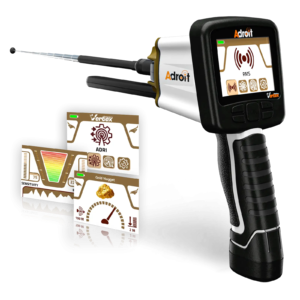
Leading the new wave, the Vertex Adroit approach and the gold step pro max are redefining how field teams revisit ancient ruins. With extended scan ranges and precise gold pinpointing, these br systems ensure no cavity, void, or precious metal cache stays hidden twice.
Why Re-Scan Ancient Sites with BR Systems
Early expeditions often lacked deep-penetration technology, leaving deeper gold veins and concealed chambers undetected. Today, the br 100 pro gold detector and br gold step pro max deliver long-range forward scanning that covers hundreds of meters per sweep, making repeat surveys faster and more rewarding.
The ajax gamma and gold step pro max platforms add advanced geophysical analysis and intelligent soil mineralization filtering. Operators report cleaner signals and fewer false positives, which matters most in mineralized archaeological zones.
Choosing the Right Detector for Deep Targets
Field professionals comparing the br detector line-up evaluate depth capability, target discrimination, and scan speed. The br 950 water detector extends operations to riverbanks and damp terrain, while the br 50 target max prioritizes rapid target logging across broad sectors.
For teams weighing investment against output, checking the gold step pro max price against multi-year warranty and worldwide support from a verified retailer is essential. Authentic br detectors with manufacturer backing protect both budget and results.
Purchase genuine devices with full warranty and expert setup guidance at
gold-detectors.net/
.
Re-sweeping ancient sites with modern br systems turns forgotten ruins into productive fields. Equipped with a br system like the gold step pro max, professional teams can confidently recover what previous generations of detectors missed, one intelligent sweep at a time.
 Vertex Adroit Long Range Systems for Ancient Ground
















 51.227%
United States of America
 18.921%
Singapore
 6.406%
China
 5.099%
Egypt
 1.583%
Saudi Arabia
 1.252%
Brazil
 1.147%
Hong Kong
 1.014%
Qatar